Telemedicine
Remote Care & Telemedicine
Quality care that reaches patients wherever they are, by video, by device, by design.
Overview
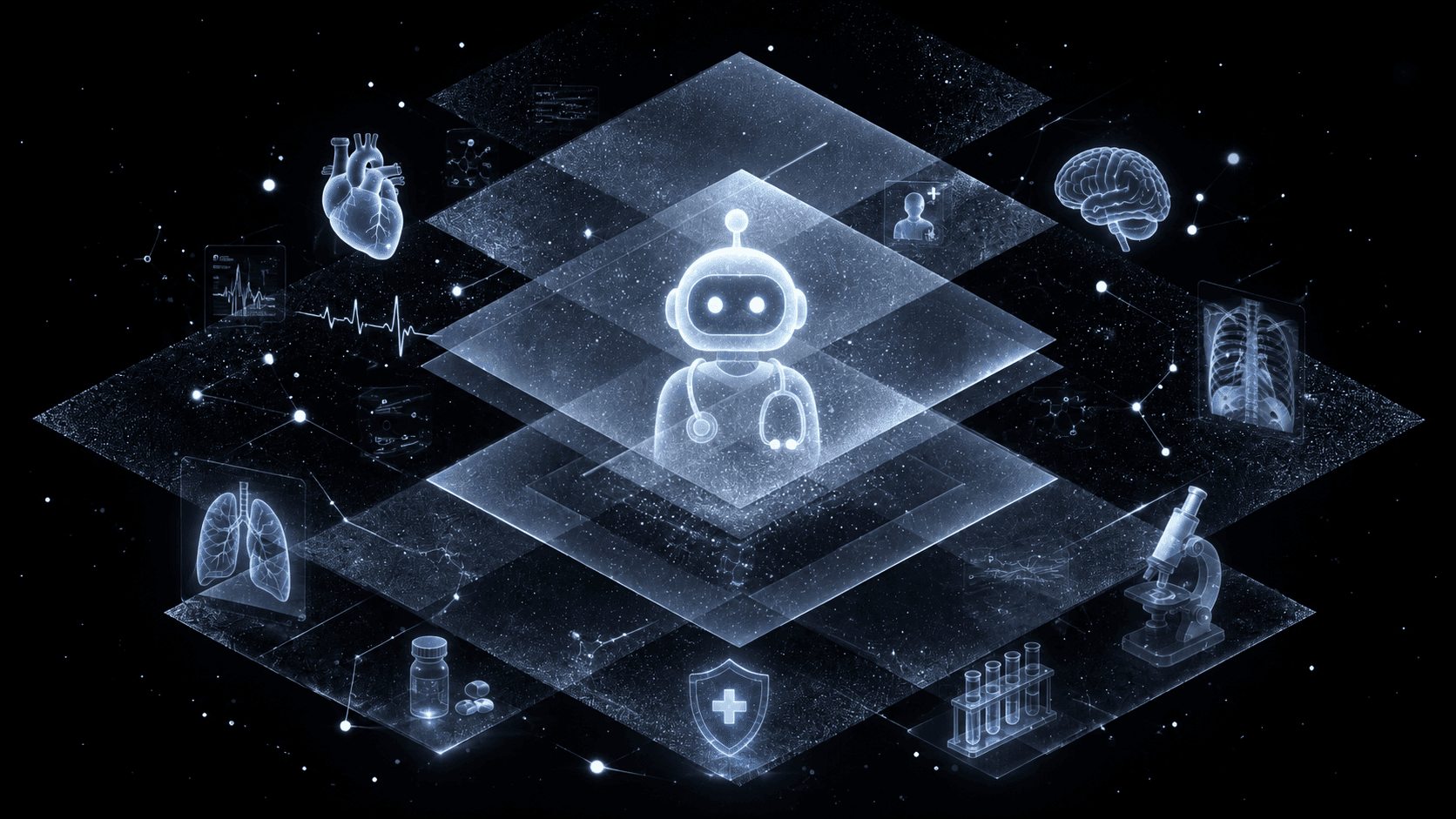
Remote Care & Telemedicine extends the reach of a hospital beyond its walls, secure video consultations, remote patient monitoring, and connected follow-up that keep care continuous between visits.
Because it runs on the same patient-intelligence layer as the rest of the suite, a virtual visit isn't a disconnected silo: the clinician sees the full record, and everything from the encounter flows straight back into it.
Outcomes
- Care that reaches patients anywhere
- Fewer missed follow-ups and readmissions
- Continuity between every visit
Capabilities
What Remote Care & Telemedicine does.
Virtual consultations
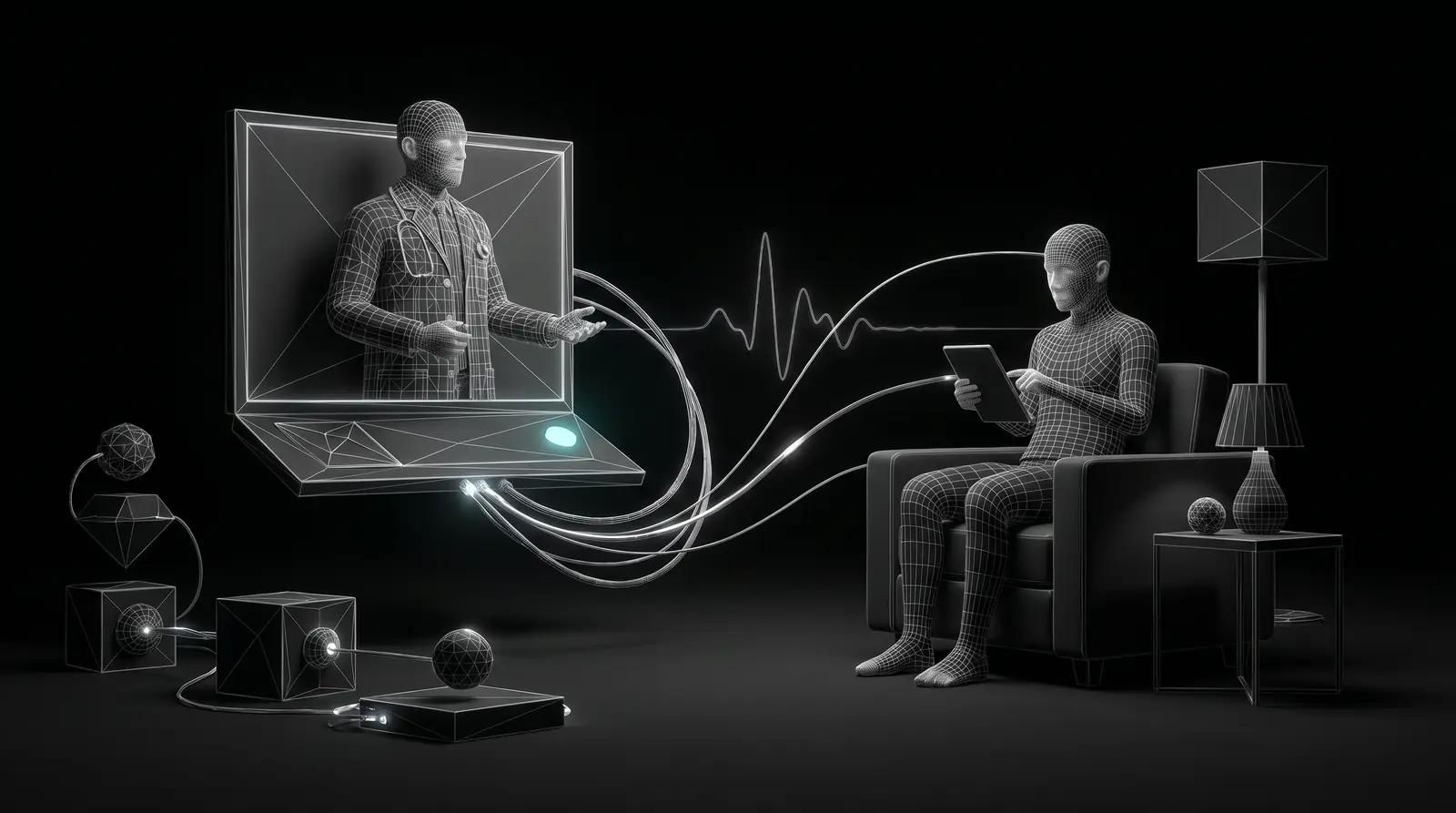
Secure video visits with the full patient record on screen, not a separate, blind channel.
Remote patient monitoring
Vitals and device data stream in continuously, with alerts when something needs attention.
Connected follow-up
Post-discharge check-ins, reminders, and escalation that close the loop from a distance.
Smart triage & routing
Patients are guided to the right level of care, virtual or in-person, from first contact.
How it works
From integration to impact.
- STEP 01
Reach
Patients connect from home or a community clinic by video, phone, or a connected device.
- STEP 02
Consult
Clinicians meet them with the full record in view and document right inside the workflow.
- STEP 03
Monitor
Remote monitoring and automated follow-up keep care continuous after the visit ends.
Curely Connect
Remote care that stays connected to the record.
Curely Connect is the mobile side of remote care: consultations, an AI health assistant, connected devices, and the medical record in one app, with a consulting workspace for the clinician on the other side of the call.
Why it matters
Remote care usually breaks in the same three places.
Connect is designed around those failures rather than around the video call.
The visit happens blind.
Most virtual care runs on a generic video tool with no access to the patient's history, so the clinician starts from nothing and whatever is decided never reaches the medical record.
A Connect consultation opens with the record already on screen, and the note, orders, and results flow straight back into it.
Care stops when the call ends.
A consultation is a few minutes. The weeks in between, when medication is missed or a reading drifts, are where outcomes are actually decided, and they are usually invisible.
Connected devices, medication reminders, and follow-up keep the thread going between visits instead of resetting at each one.
Distance decides who gets seen.
Specialists cluster in cities. For everyone else, a specialist opinion means a journey, a day of lost income, and often no appointment at the end of it.
Patients reach hospitals and independent specialists from where they are, and can request a consultation the moment they need one.
For patients
Everything care asks of you, in one place.
Not a video app with a health section bolted on, but the whole arc of care between visits.
Consultations by video
Secure video visits with hospitals and independent specialists, with in-call chat and file sharing when something needs to be shown rather than described.
Care when you need it
Book ahead, or request an instant consultation and be connected to an available specialist rather than waiting for the next open slot.
Arie, your health assistant
An AI assistant you can talk to or type to, grounded in your own health context rather than answering in the abstract.
Guided symptom check
An adaptive interview that asks a handful of targeted questions, then points you to the right level of care instead of a list of frightening possibilities.
Curely Vision
Point the camera at a meal, a medical document, or a skin concern and get a clear, personalized reading of what you are looking at.
Connected devices
Bluetooth monitors and the health data already on your phone or watch sync automatically, so vitals build a picture over time rather than a one-off number.
Medications, remembered
A medication list with dose reminders and overdue nudges, kept private on the lock screen.
Your record, with you
Prescriptions, lab results, imaging, and visit history in one timeline, for you and for the family members you care for.
For clinicians
The same app, from the other side of the consultation.
Doctors and specialists get a workspace built for consulting at a distance, not a patient app with extra buttons.
The chart, not just the call
Every consultation opens with history, medications, allergies, results, and the reason for the visit already in view.
An assistant that drafts the note
Ambient documentation listens to the consultation and drafts the clinical note, so the visit is spent looking at the patient. Nothing enters the record until the clinician approves it.
A queue worth opening
The day opens on what actually needs attention: who is waiting, what is unread, which results have come back, and what is escalating.
Practice on your terms
Set availability, take instant consultations when free, and keep earnings and consultation history in one place.
How it works
One thread, from first symptom to follow-up.
Reach
The patient opens the app, describes what is wrong, and is guided to the right level of care, whether that is self-care, a consultation, or an emergency.
Consult
They meet a clinician by video, who sees the full record and documents inside the same workflow rather than afterwards.
Continue
Medications, reminders, connected devices, and messaging keep care going after the call, and anything that drifts raises a flag.
Early access
Join the Curely Connect waitlist.
Curely Connect is opening in stages. Tell us who you are and we will send an invite when it reaches your region.
- Patients get early access to consultations, the assistant, and connected devices.
- Doctors and specialists get onboarded to consult on the platform and set their own availability.
- Hospitals and clinics get a conversation about connecting Connect to their existing record.
FAQ
Curely Connect, answered.
- What is Curely Connect?
- Curely Connect is the Curely AI mobile app for care outside the hospital. It gives patients video consultations, an AI health assistant, medication and vitals tracking, and their medical record, and gives doctors a consulting workspace with the patient's chart and an assistant that drafts the clinical note.
- Is Curely Connect available to download yet?
- Not yet. Curely Connect is in development and opening in stages by region. Joining the waitlist is how you get an early-access invite when it reaches you.
- Do I need my hospital to use Curely AI?
- No. Curely Connect is hospital-agnostic. You can consult independent specialists on the platform regardless of where you normally receive care. If your hospital does run on CurelyHMS, your consultations and results connect to the same record.
- Does a remote consultation reach my medical record?
- Yes, when your care is on the Curely platform. Connect shares the same patient-intelligence layer as CurelyHMS, so the clinician sees your history during the consultation and the note flows back into the record rather than living in a separate app.
- Does the AI diagnose or prescribe?
- No. The assistant, the symptom check, and the scanners provide information and help route you to the right care. Clinical decisions are made by a licensed clinician, and anything the AI drafts for a doctor is reviewed and approved by that doctor before it enters the record.
- Is my health data private?
- Yes. Sessions are encrypted and access-controlled, records are audited, and the platform is built to HIPAA-grade and GDPR-ready standards. Your data is used to care for you, not sold.
FAQ
Common questions.
- Does it work in low-bandwidth areas?
- Yes. Visits degrade gracefully to audio and store-and-forward, and connected devices sync when a connection is available, important for rural and community settings.
- Is the video secure and private?
- Yes. Sessions are encrypted, access-controlled, and audited, built to HIPAA-grade and GDPR-ready standards.
- Does a virtual visit see the full record?
- Yes. Remote care shares the same patient-intelligence layer, so the clinician sees the complete history and everything flows back into it.
Explore the rest of the suite
From the blog
Healthcare AI
Why Clinical AI Loses Accuracy When Moved to New Hospitals
Most clinical AI models lose accuracy when moved to a new hospital, and regulatory clearance does not measure it. What the external validation evidence shows.
ReadHealthcare AI
The Best Clinical AI Agent Finishes Fewer Than Half Its Tasks
The strongest clinical AI agent yet tested in a live EHR environment completes 46 percent of physician tasks, and reproduces only 28 percent. Three new benchmarks show why reliability, not medical knowledge, is now the constraint.
ReadClinical Workflows
Where AI Actually Shortens Turnaround Time in Healthcare
AI compresses specific waiting intervals in the diagnostic and documentation chain, not a facility's whole clock. The evidence is strongest in radiology reprioritization and ambient documentation, and thinner in the lab.
Read